CLIENT PROJECT
Designing a more engaging and satisfying football game experience to strengthen UMD alumni connections and participation
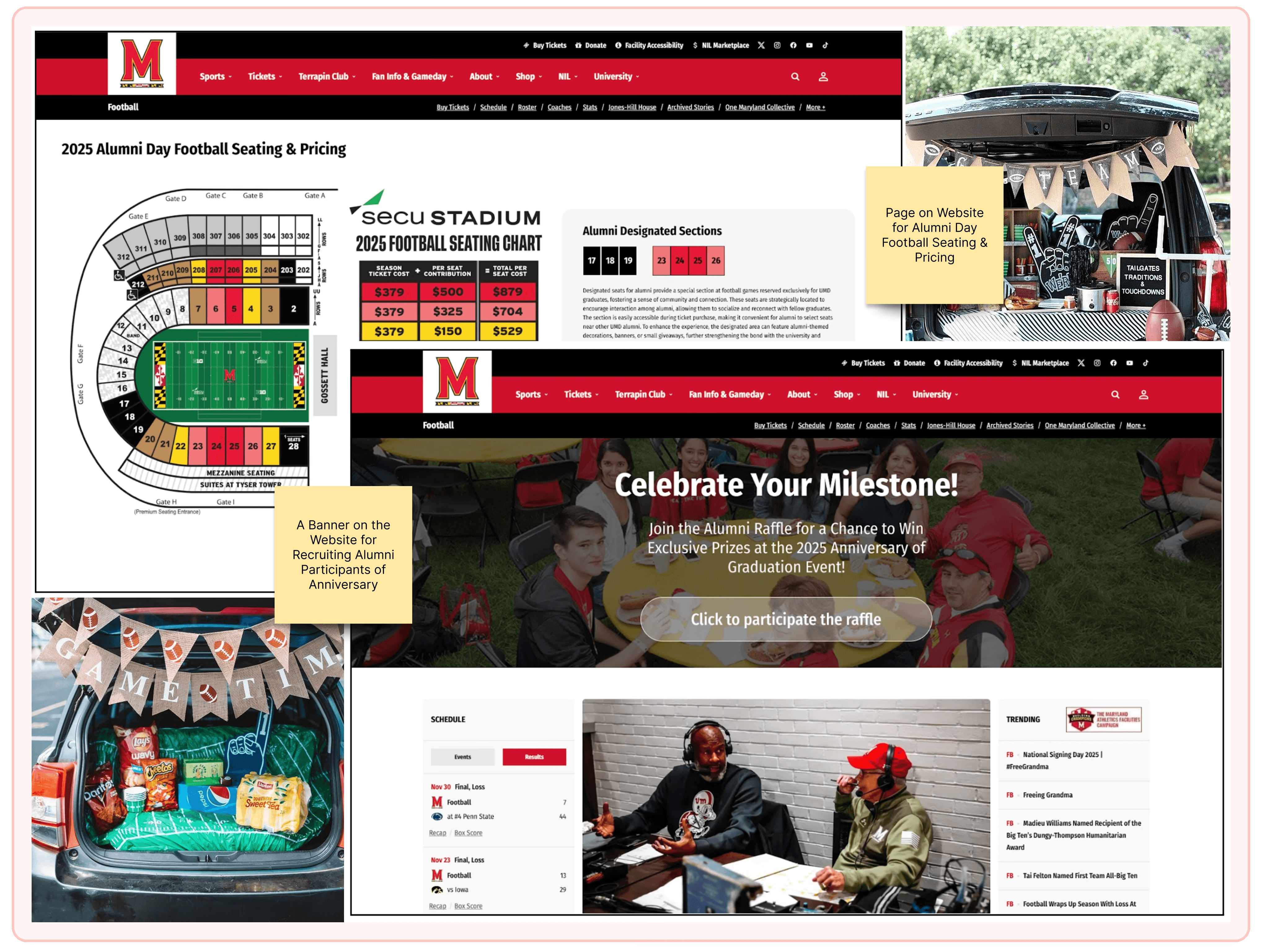

CONTEXT
Problem Space
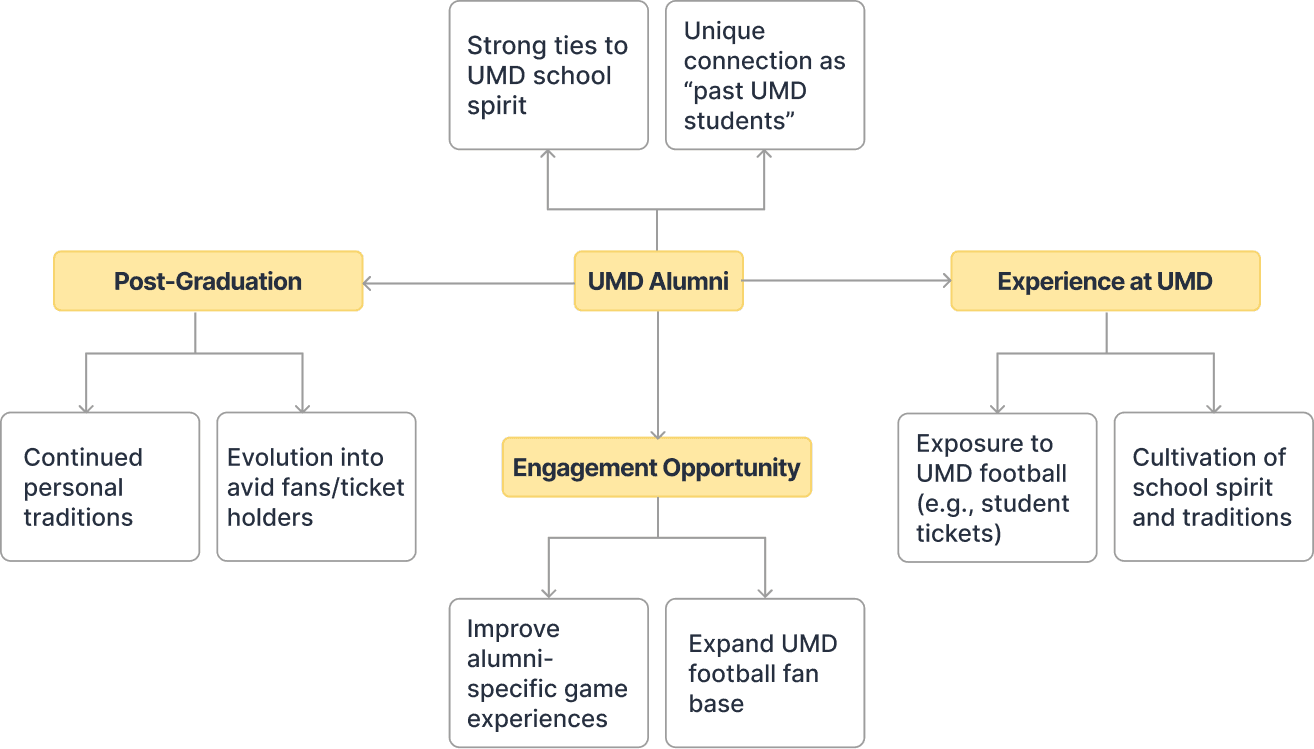
📄 OVERVIEW
✏️ PROBLEM STATEMENT
Address the challenges in improving alumni engagement at UMD football games, focusing on the lack of targeted support and facilitation
🎯 GOAL
The primary goal of this project is to build a marketing strategy and improve the fan experience for UMD alumni at football games

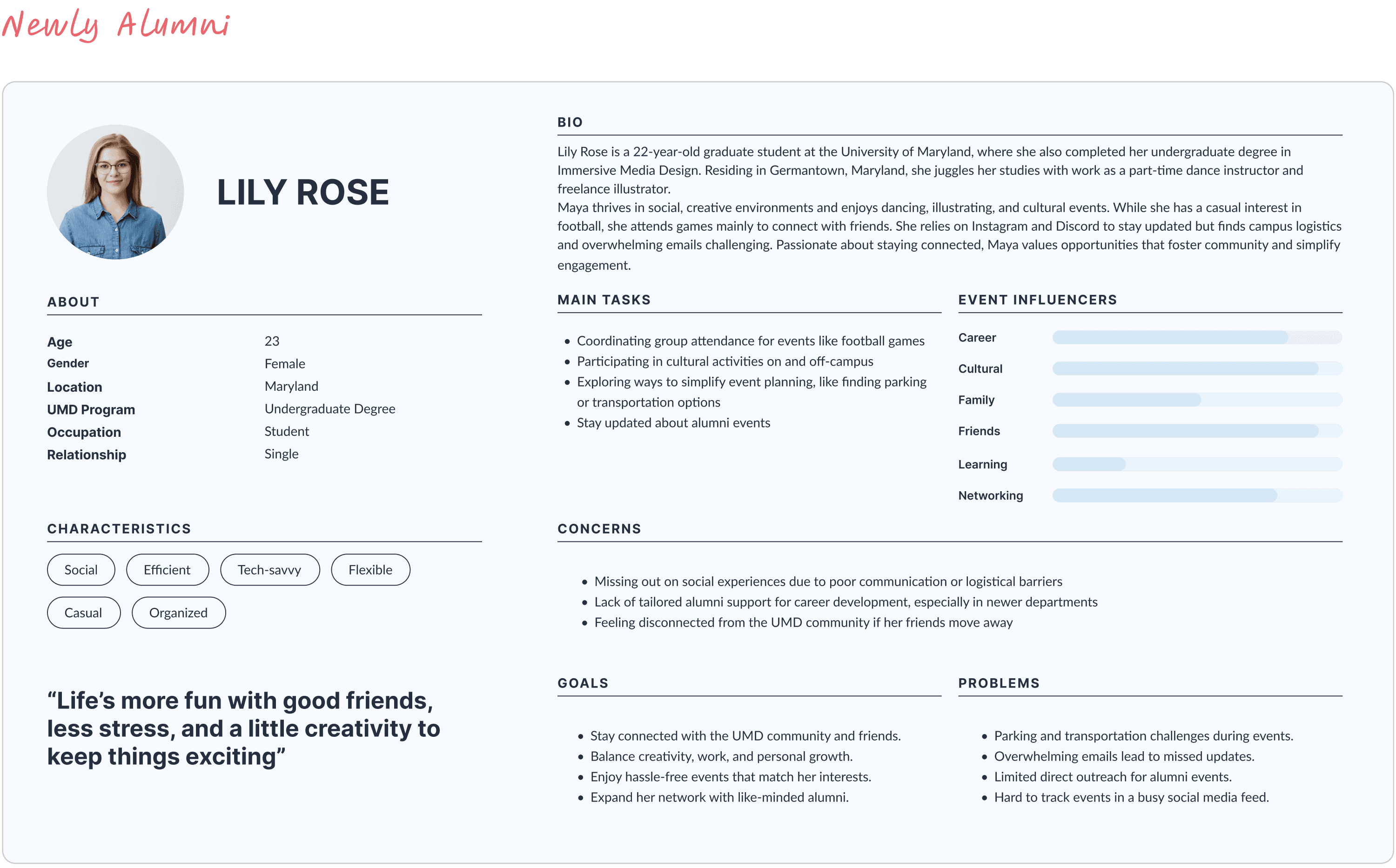
Newly Alumni
Graduated within the last 5 years
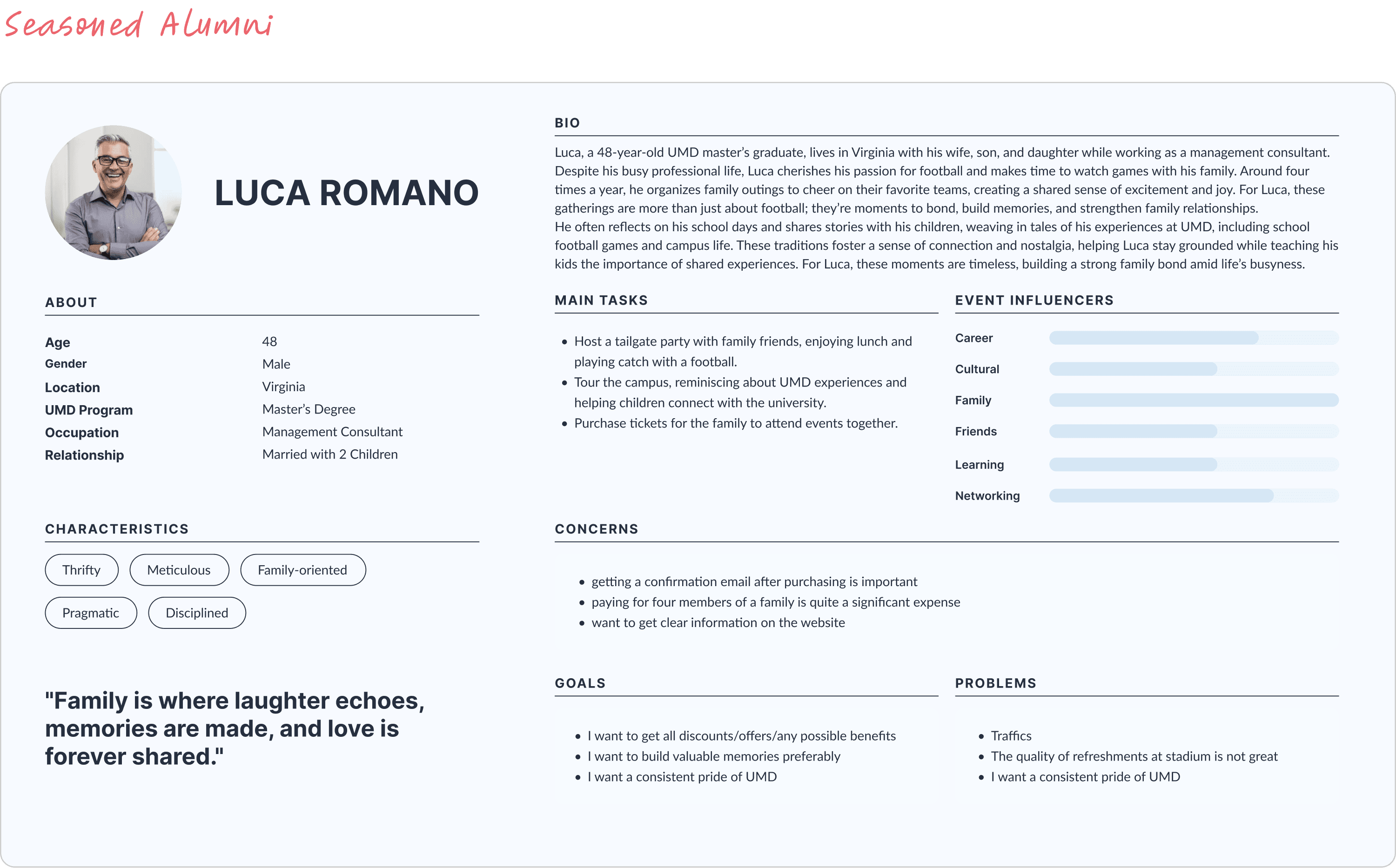
Seasoned Alumni
Graduated more than 5 years ago
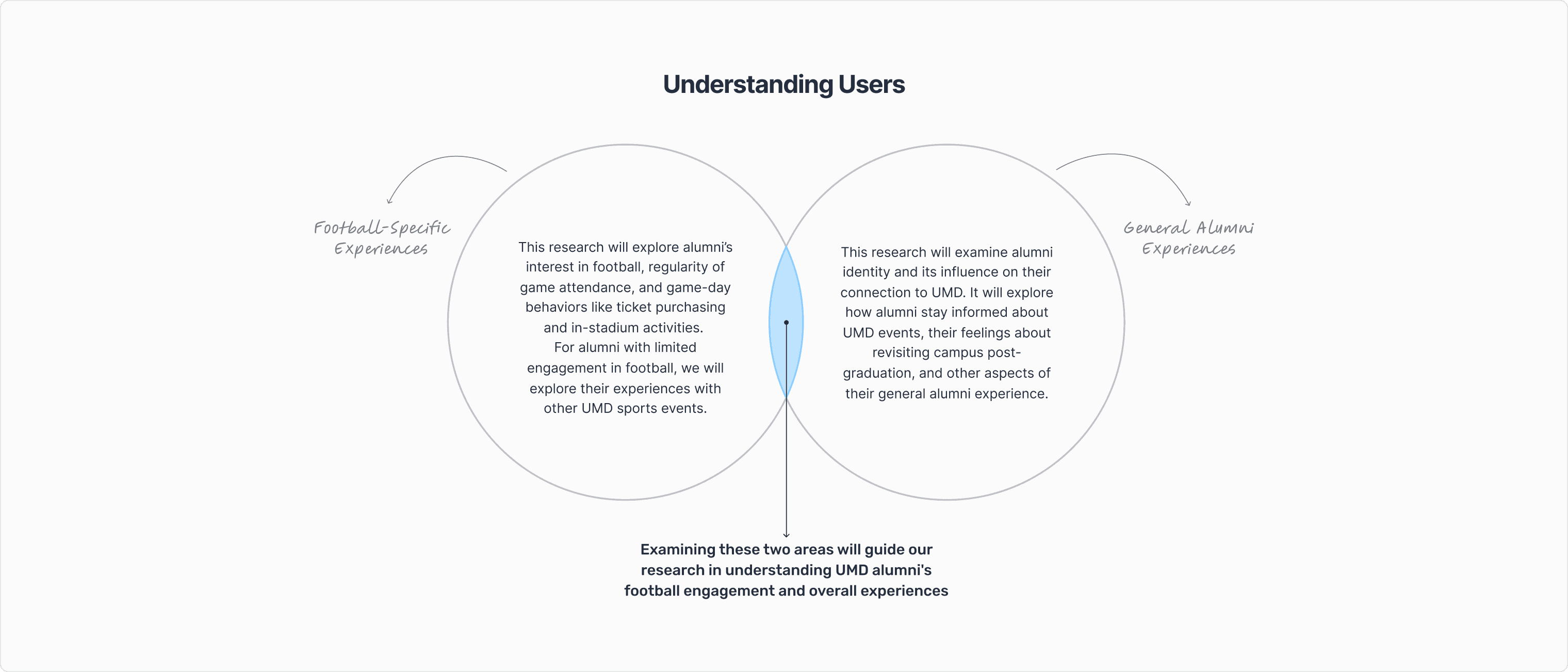
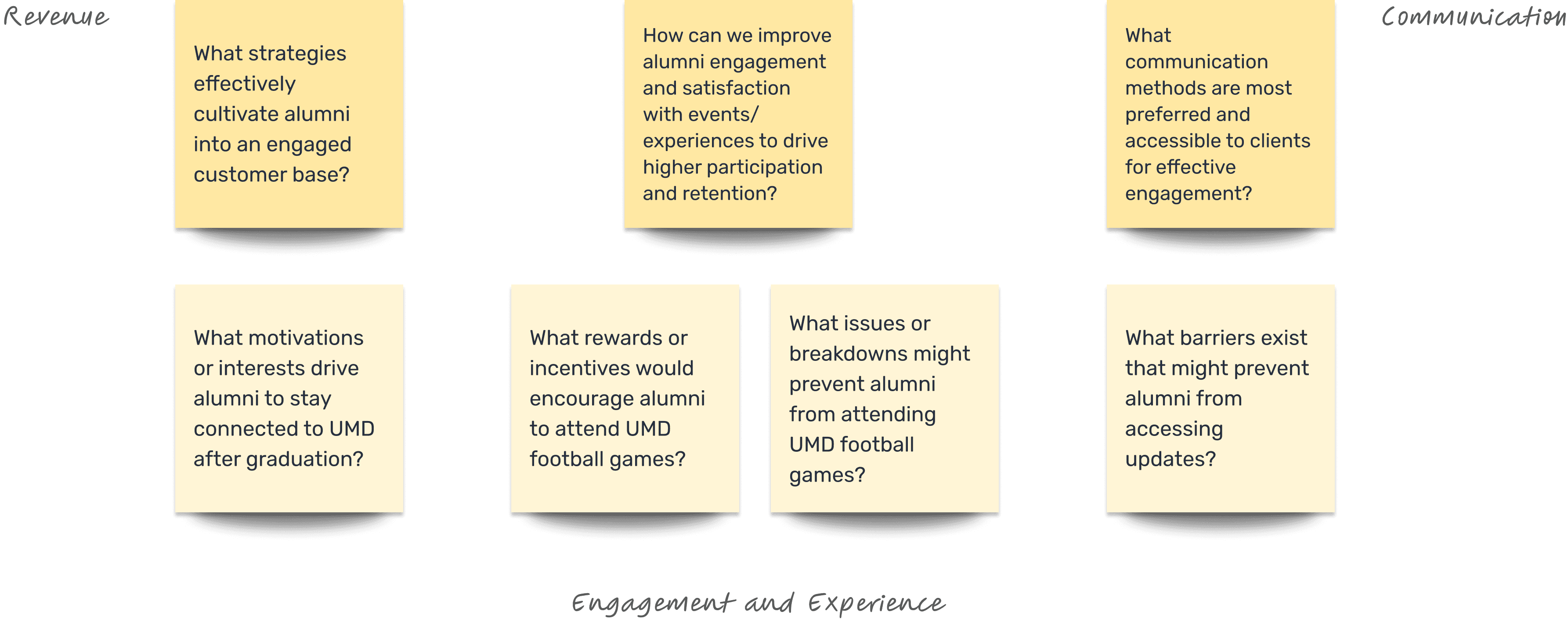
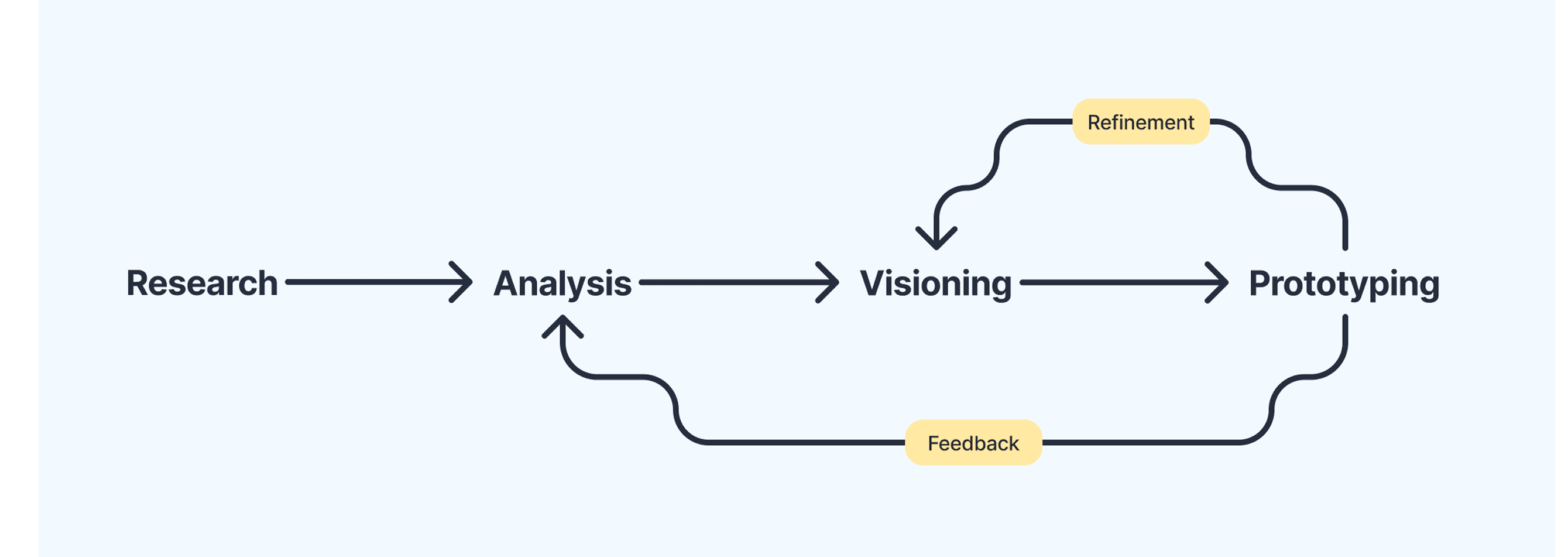
RESEARCH PLAN
Study Design
We used contextual interviews as our primary research method to understand behaviors, motivations, and pain points. To complement these interviews, we conducted a survey as an alternative method to gather broader perspectives on alumni experiences.
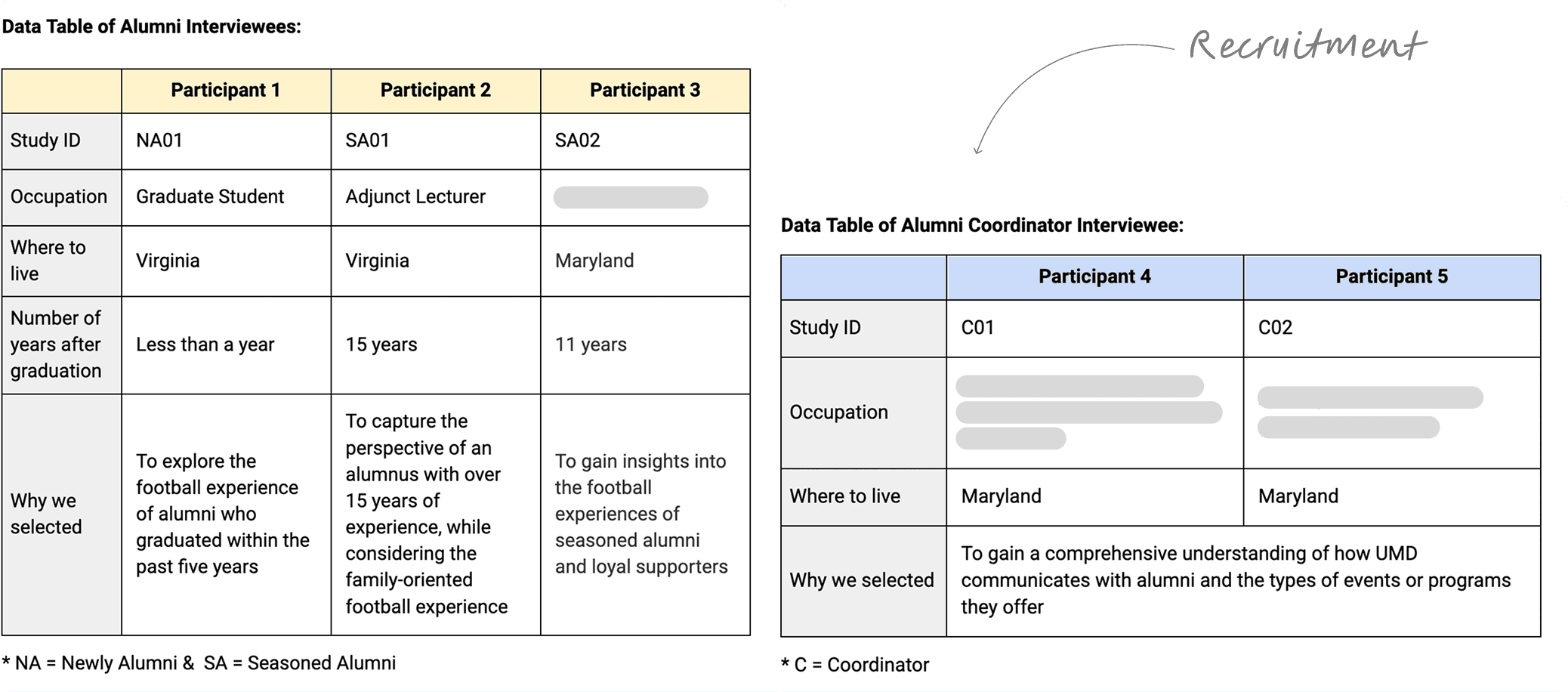
*Participants were recruited through personal networks, LinkedIn, and targeted email invitations, ensuring representation across graduation years, professional roles, and engagement levels.
Interview | Guide
We conducted five semi-structured contextual interviews, including 3 Alumni and 2 Alumni Community Coordinators
We conducted interviews using a funneling approach combined with task performance exercises to observe behaviors, uncover pain points, and gather qualitative insights
Survey | Guide
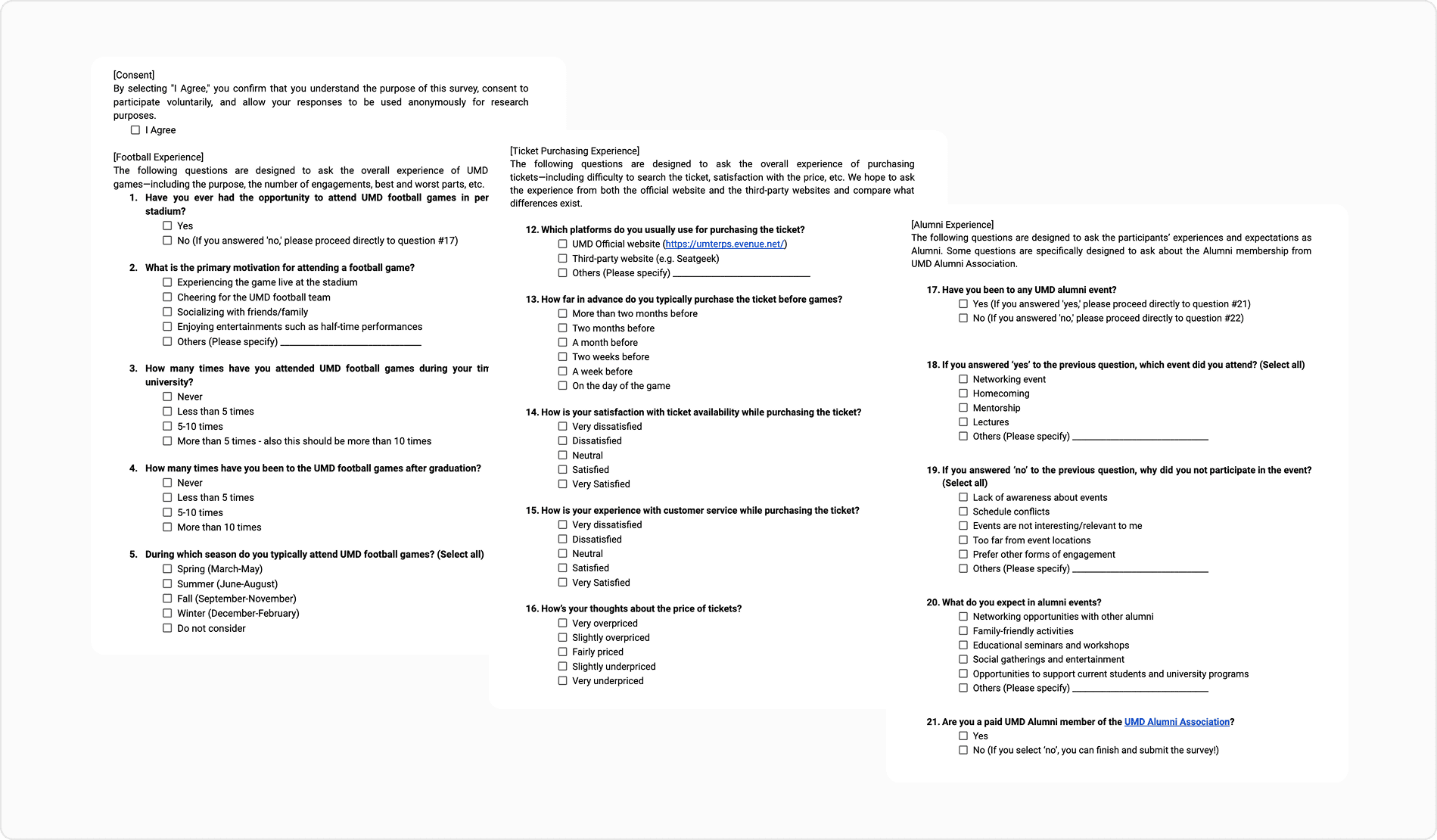
We conducted a survey with 15 participants, featuring 22 questions in multiple-choice, rating-scale, and open-ended formats. The survey explored football experiences, ticket purchasing, alumni engagement, and demographic details
DATA COLLECTION
The collected data focused on alumni motivations, communication preferences, and challenges in engaging with UMD football events, aligning with our research questions.
Key Takeaways from Interviews
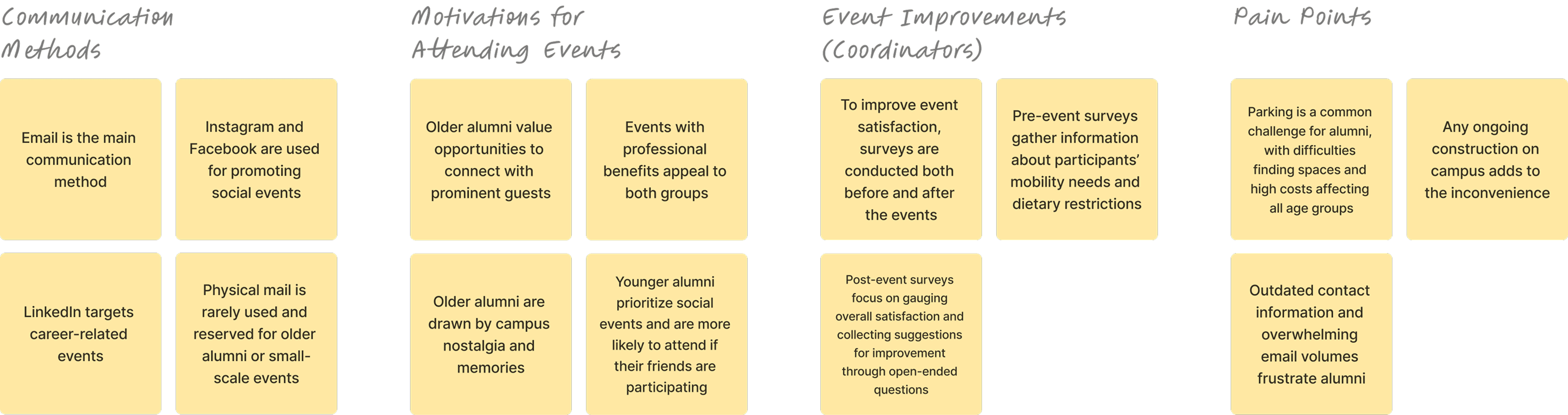
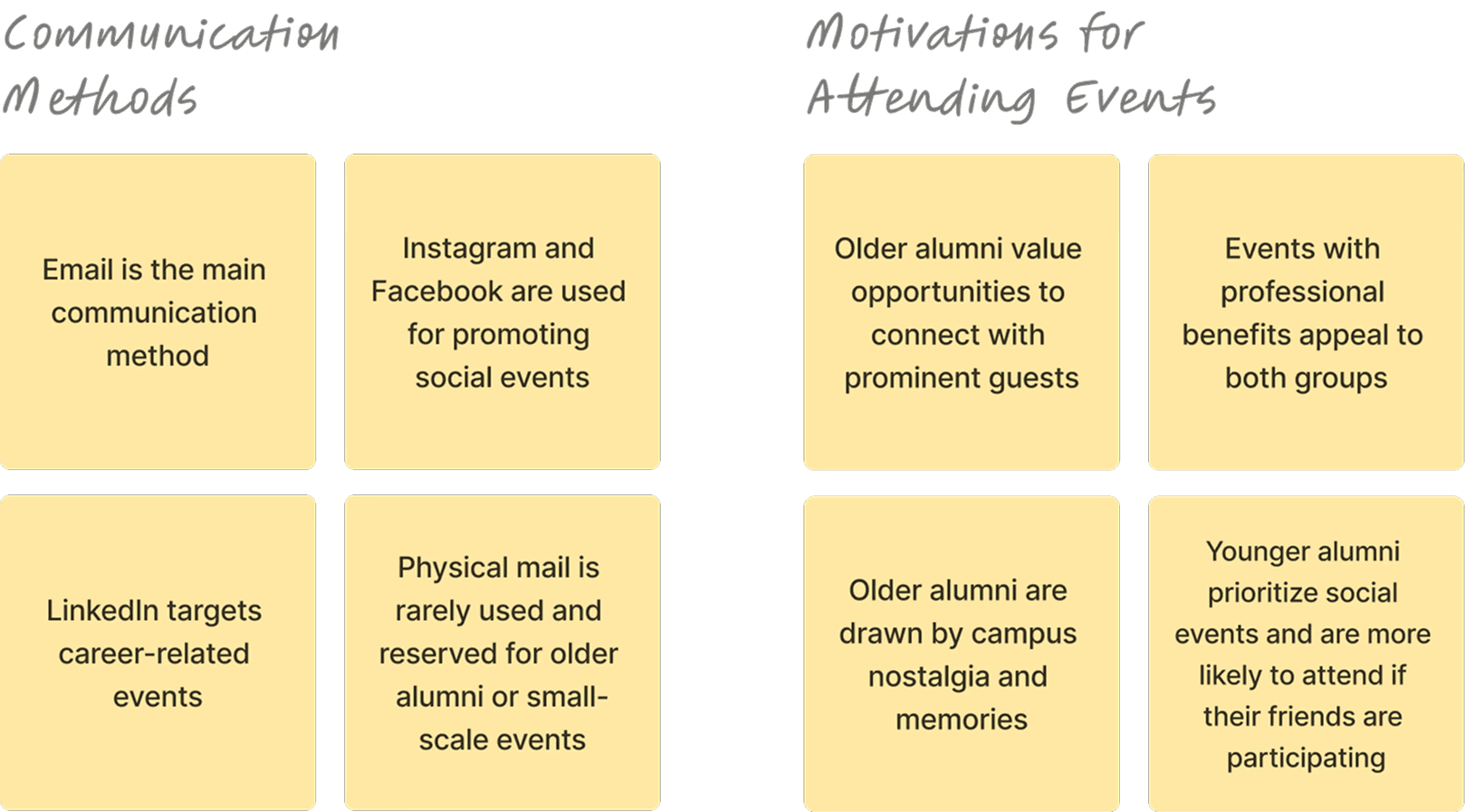
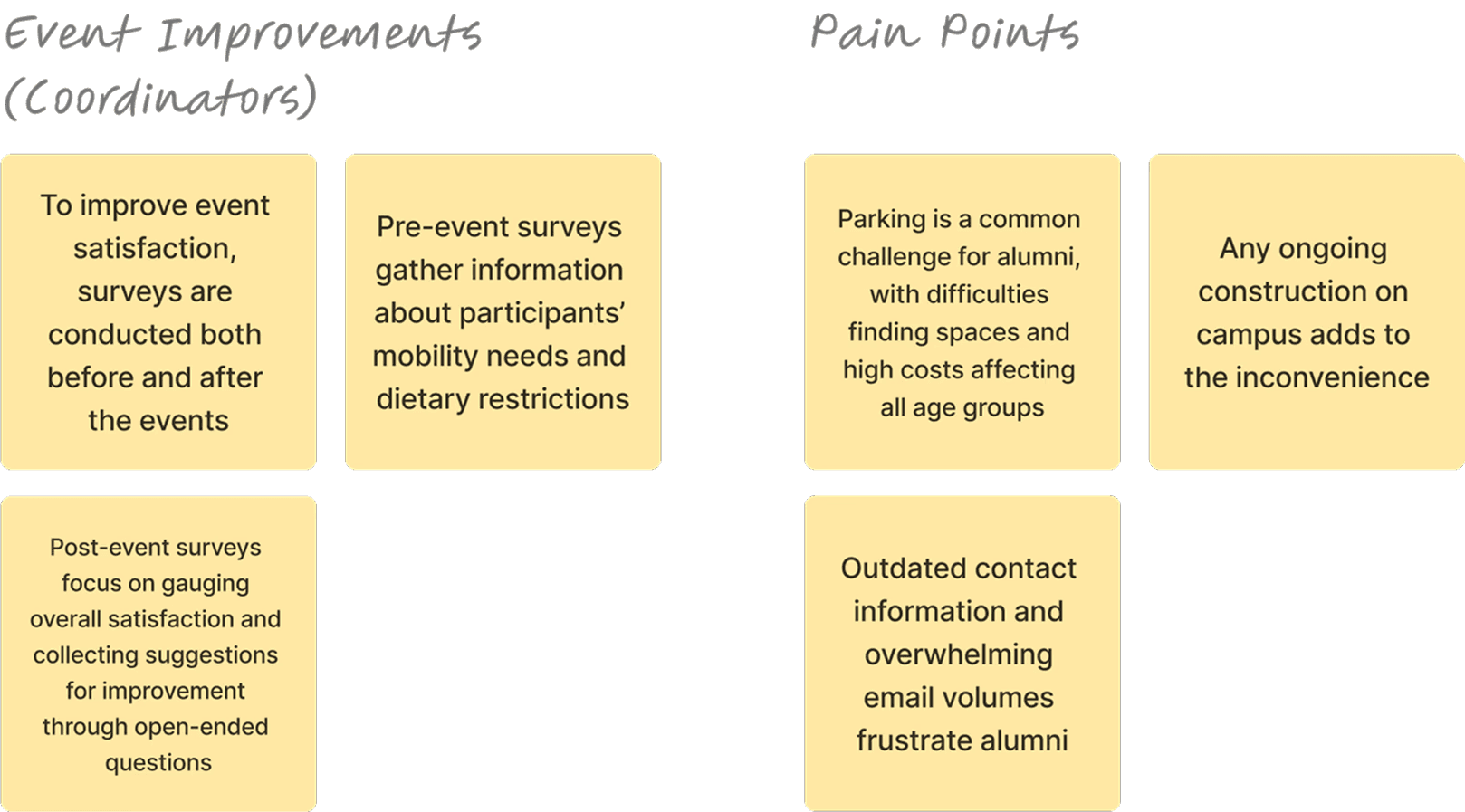
We analyzed the survey responses based on the categories to gather quantitative insights
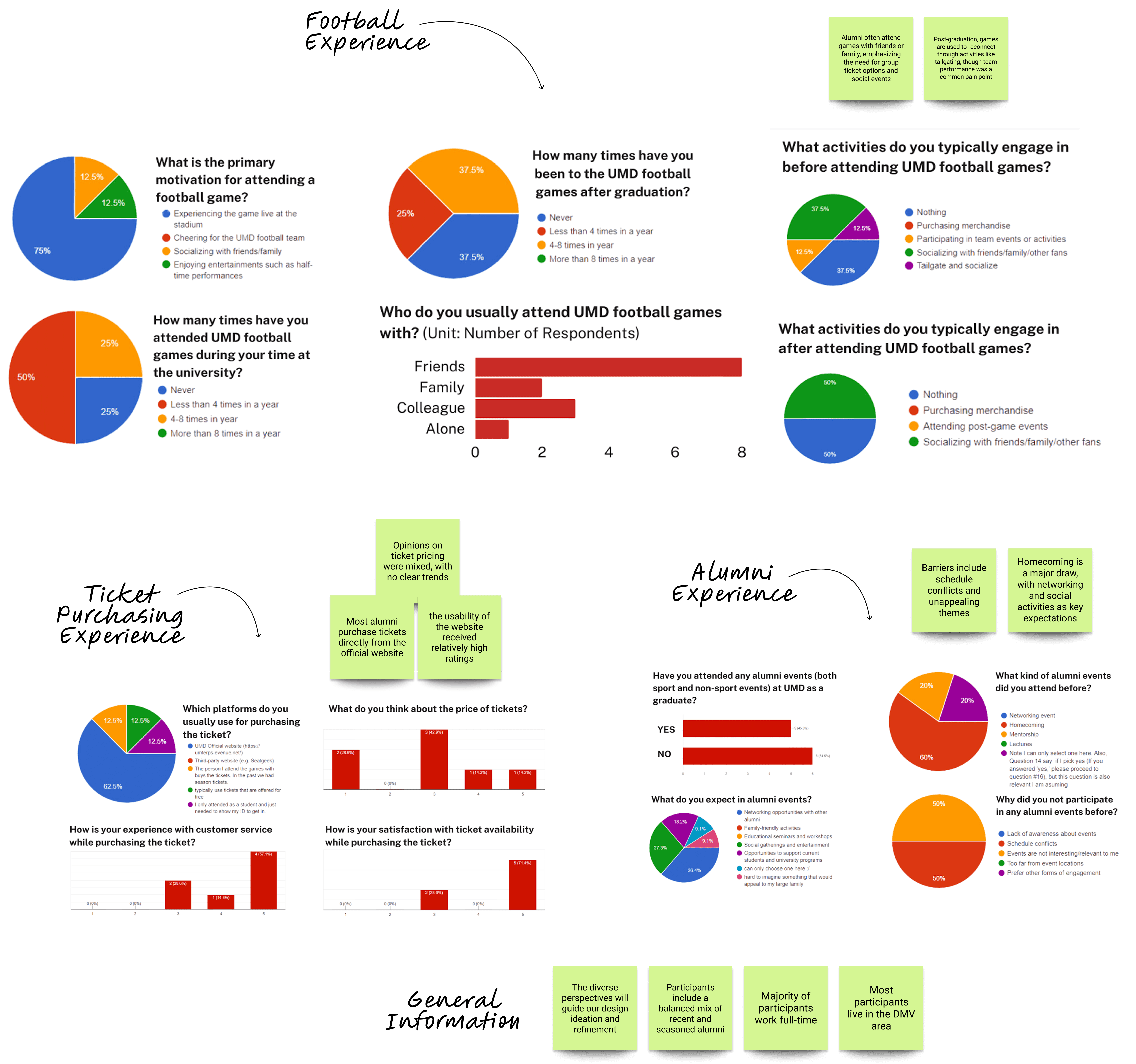
Key Insights
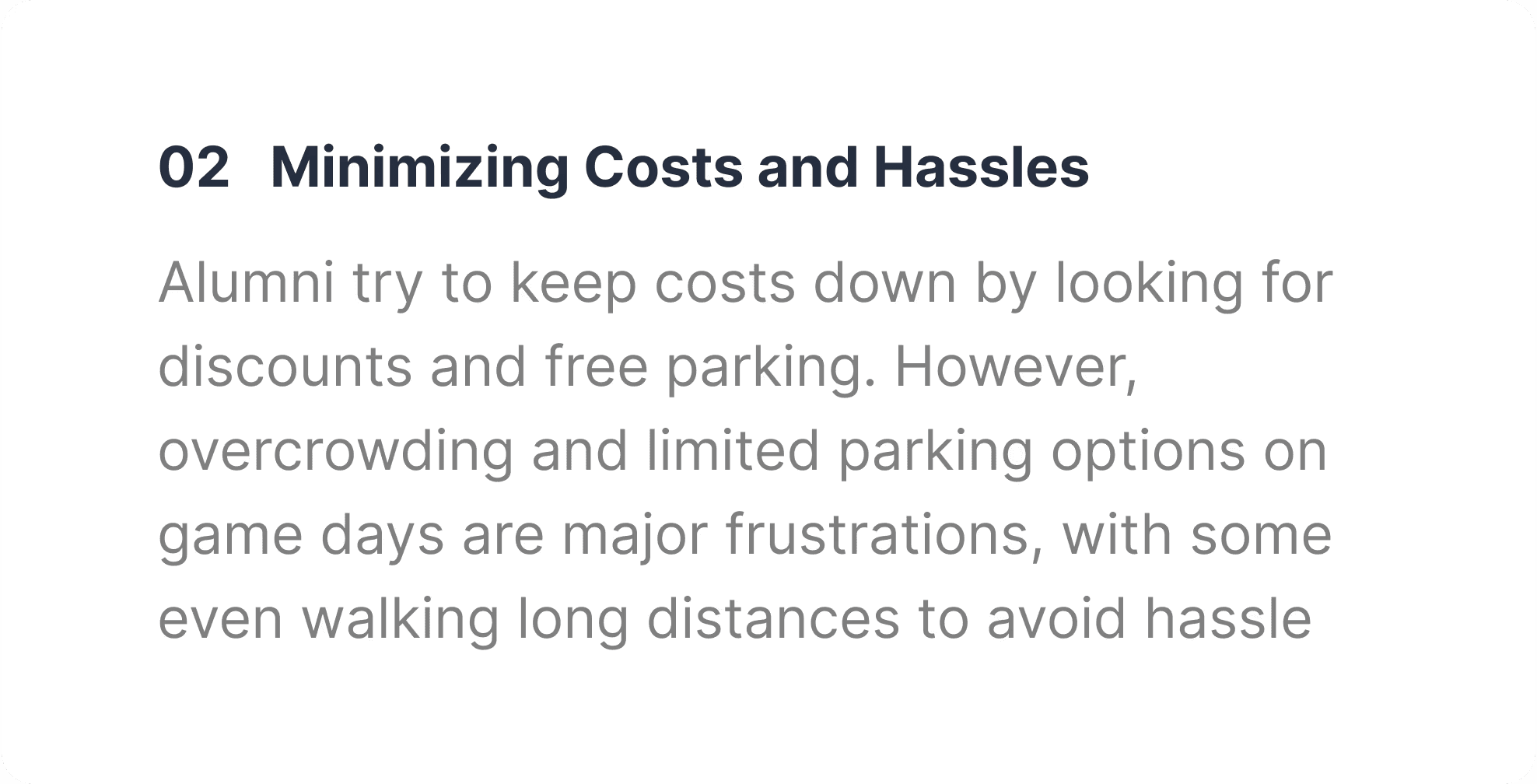
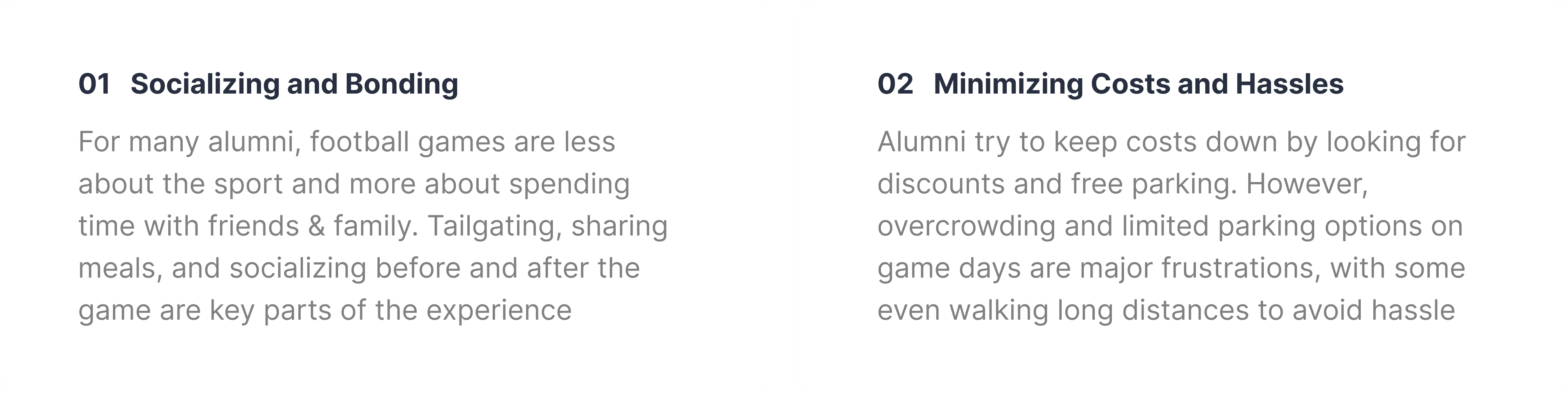
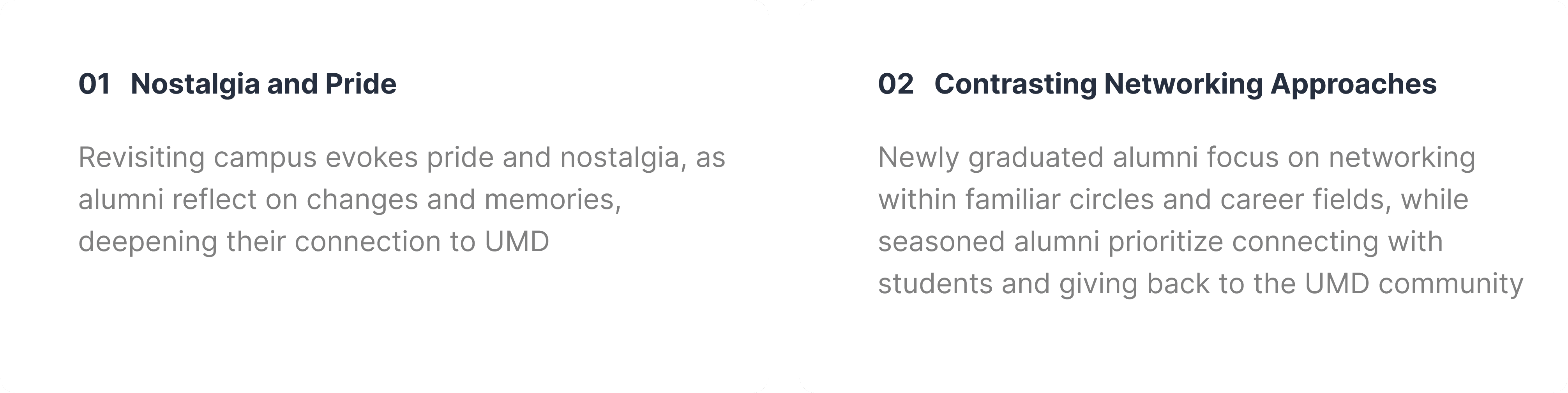
Based on contextual interviews with alumni and alumni coordinators, as well as surveys across alumni from various graduation years, our research revealed key insights into UMD alumni’s experiences attending football games. Our findings also provide transferable insights into broader needs, goals, and barriers of alumni, which we gained by exploring comprehensive alumni experiences beyond sporting events.

ANALYSIS
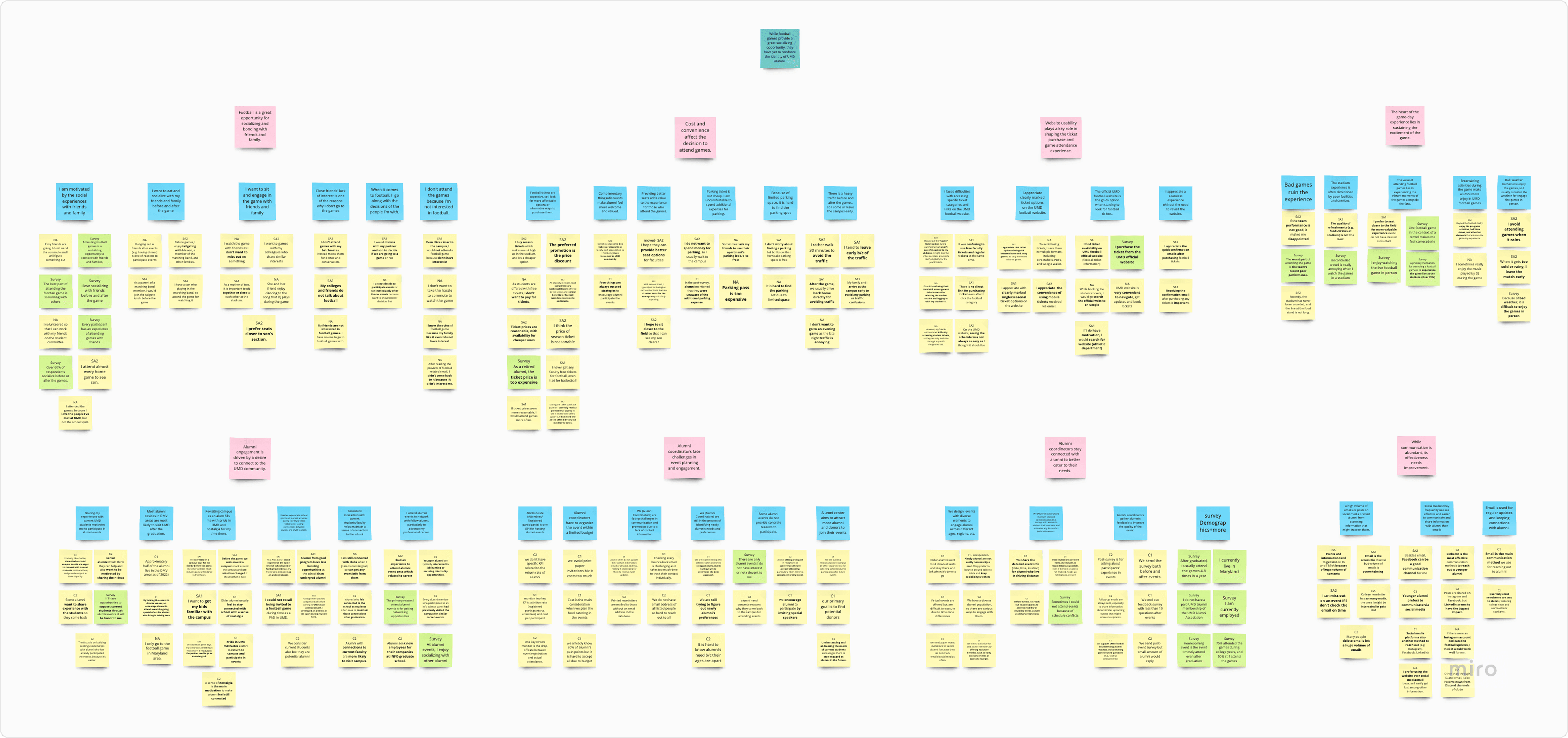
01 Affinity Diagram
We identified eight categories: four on football experiences and four on promoting alumni identity. Findings showed football games are valued for social connections but fall short in reinforcing alumni identity, which remains an underutilized driver for deeper engagement. These insights guided our focus on communication, motivations, and strengthening alumni identity.
02 Experience Models
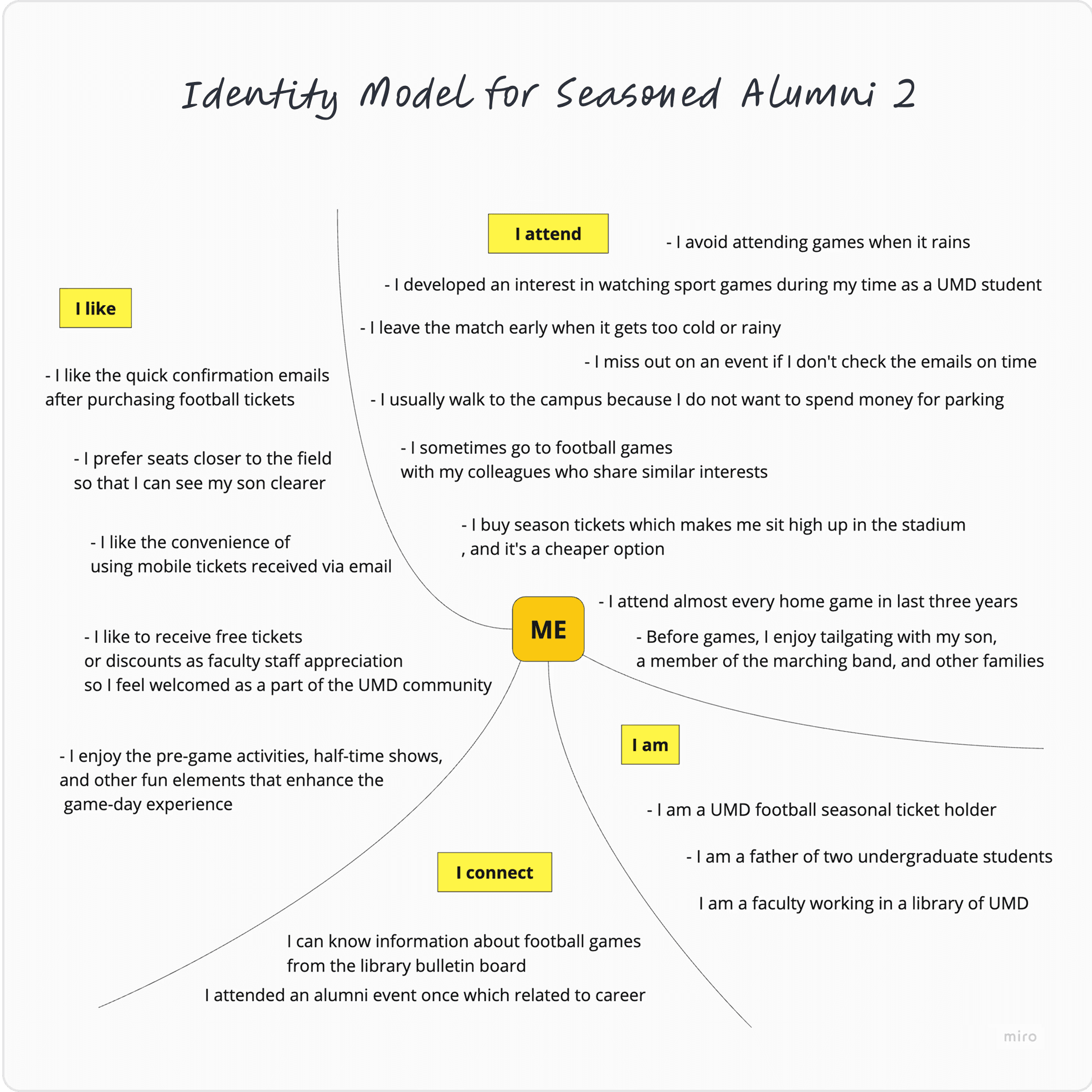
Selected Model: Identity Model
UMD football games connect alumni to their student days through school spirit, nostalgia, and community. Focusing on these identity-driven elements allowed us to create meaningful and personal engagement strategies
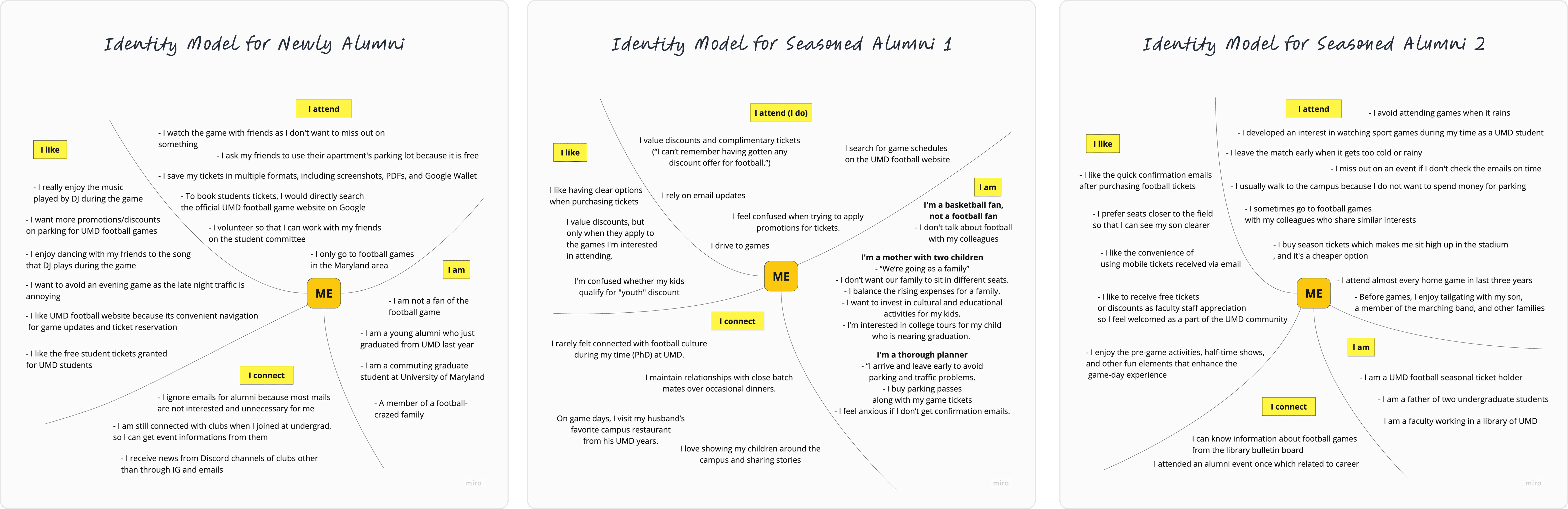
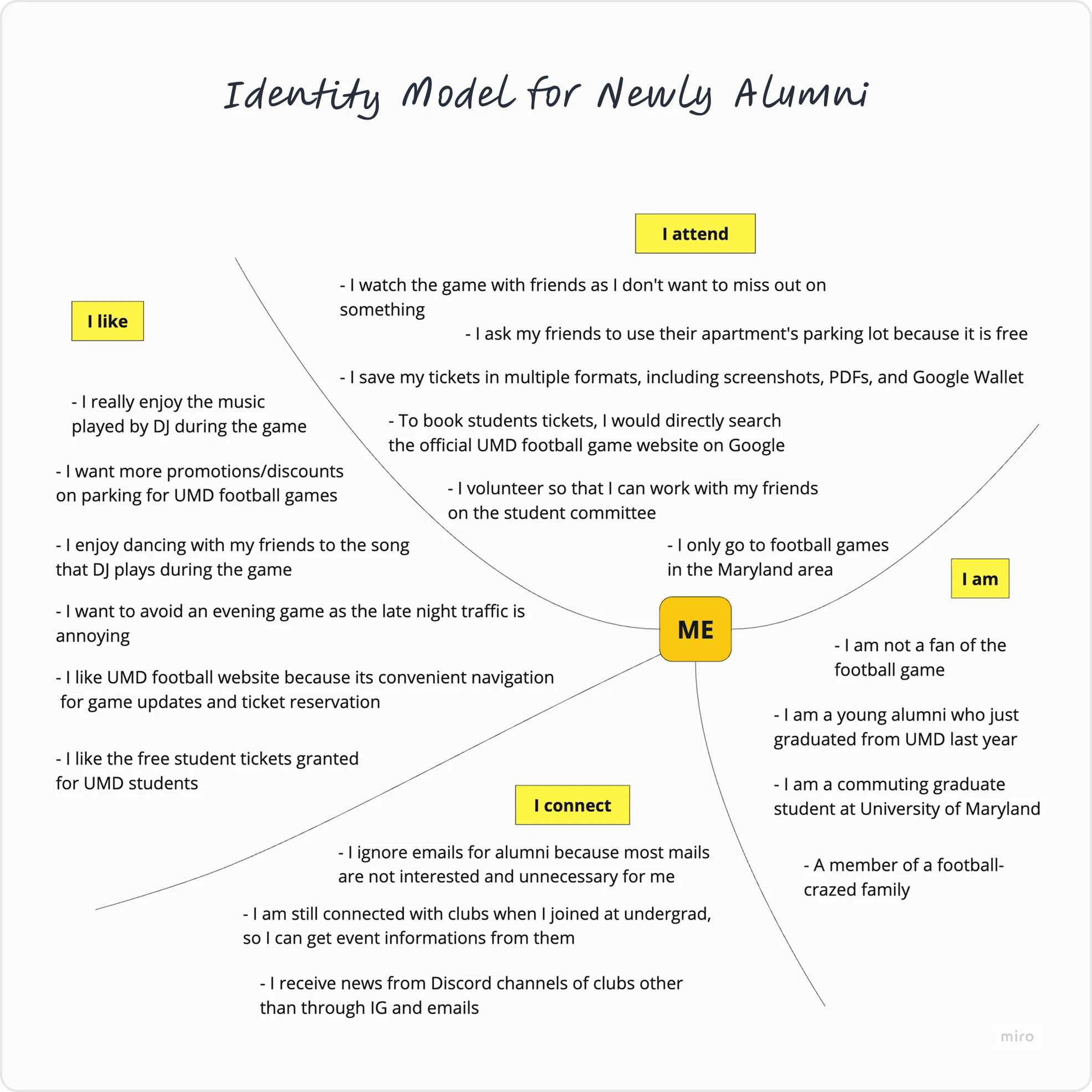
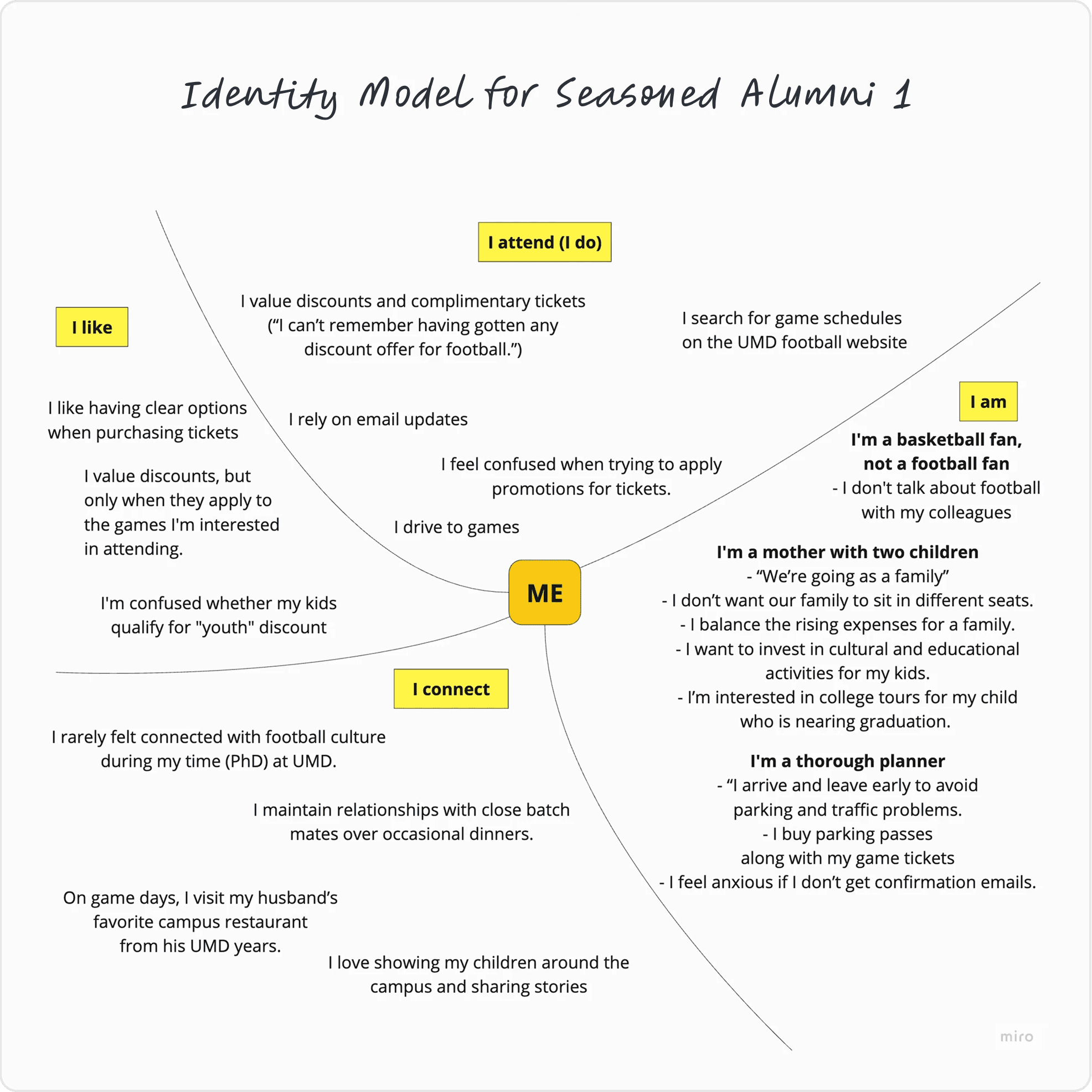
CONSOLIDATED MODELS
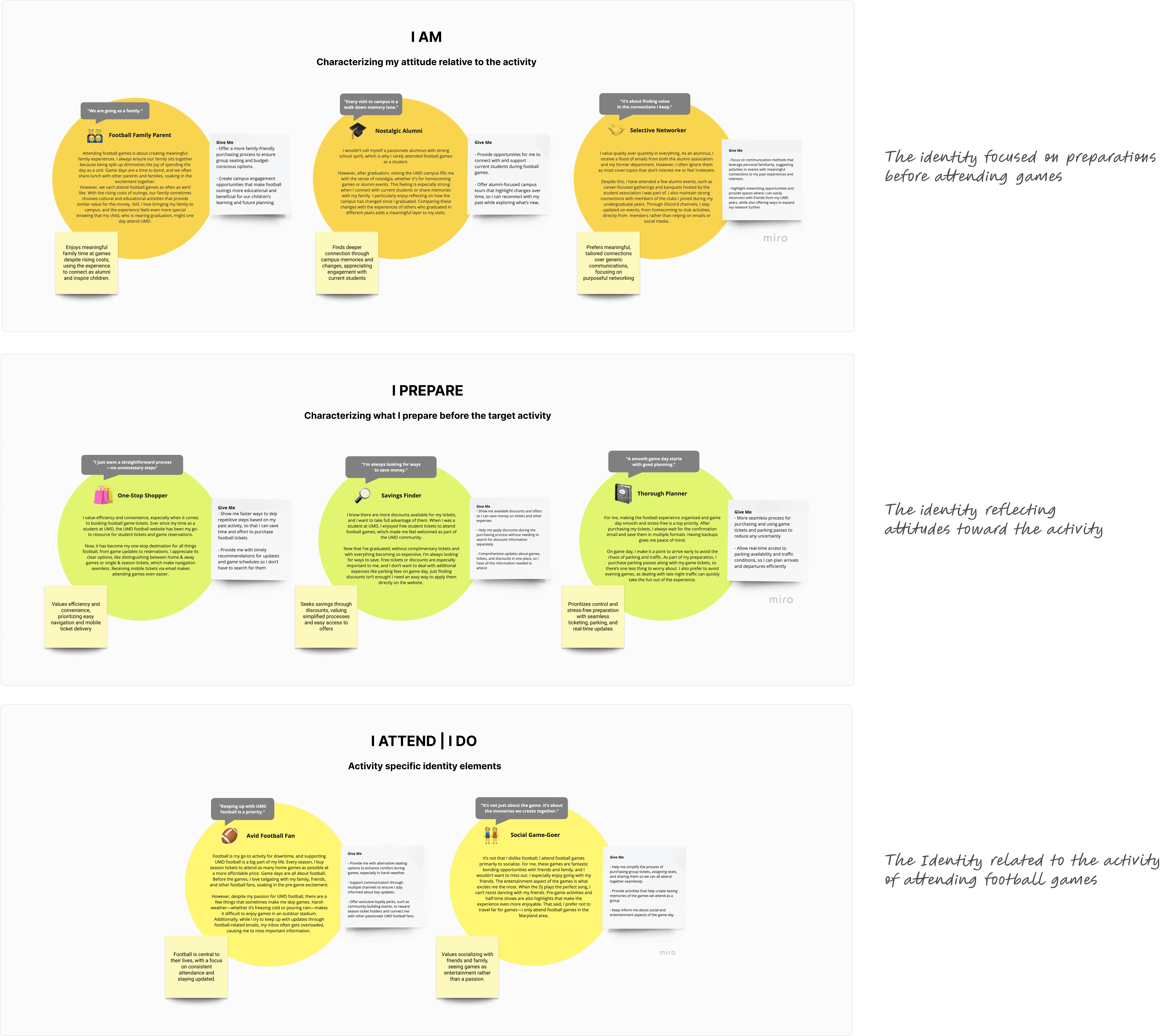
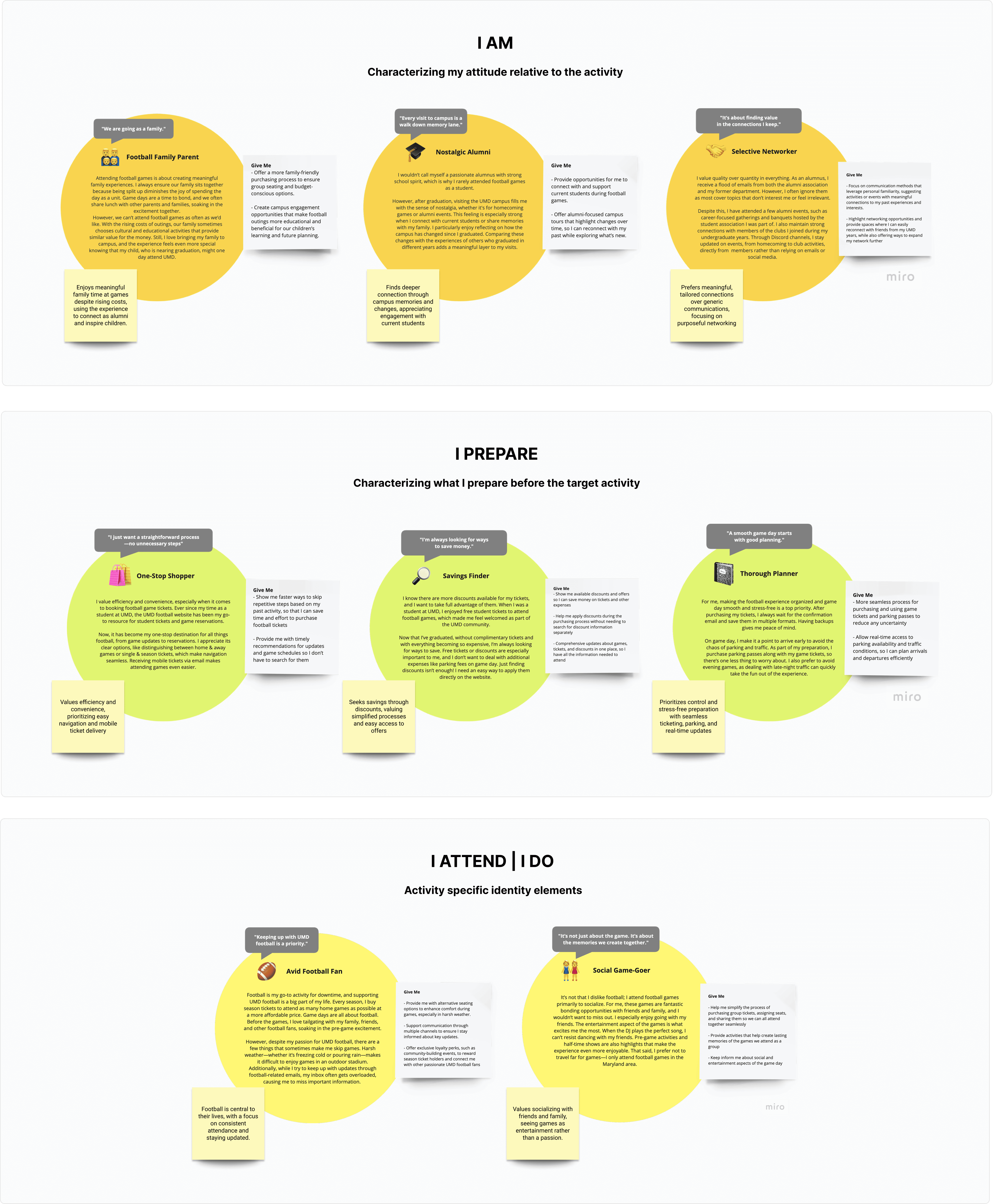
UMD alumni showcase eight unique identities which highlight core values like school spirit, nostalgia, and community, enriching their connection to the university
03 Personas
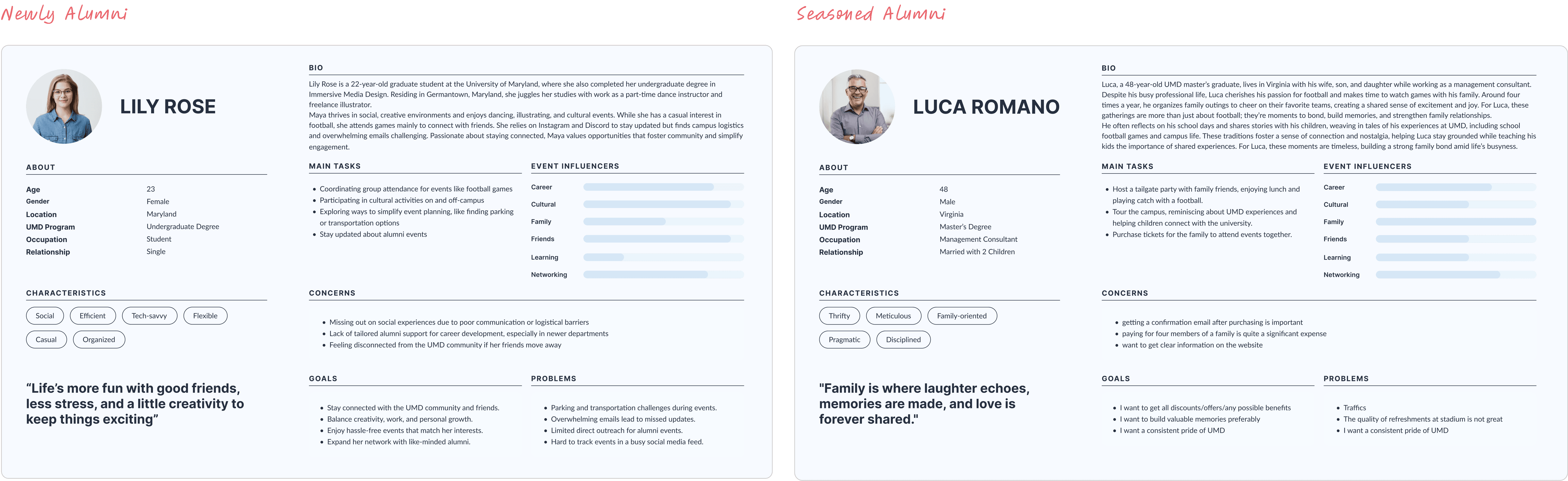
From alumni interviews, we created two personas: Newly Graduated Alumni and Seasoned Alumni, highlighting unique needs and motivations to design tailored strategies
IDEATION
Visioning
Drawing on our extensive research—interviews, surveys, and synthesized findings such as affinity diagrams, identity models, and personas, we explored UMD alumni's football experiences and engagement. By addressing the diverse needs and goals associated with the various identities alumni bring to their involvement in football games, we developed a product concept designed to strengthen their connection to the games. The image below illustrates the visions we created.

SOLUTION
Conceptual Product Ideas
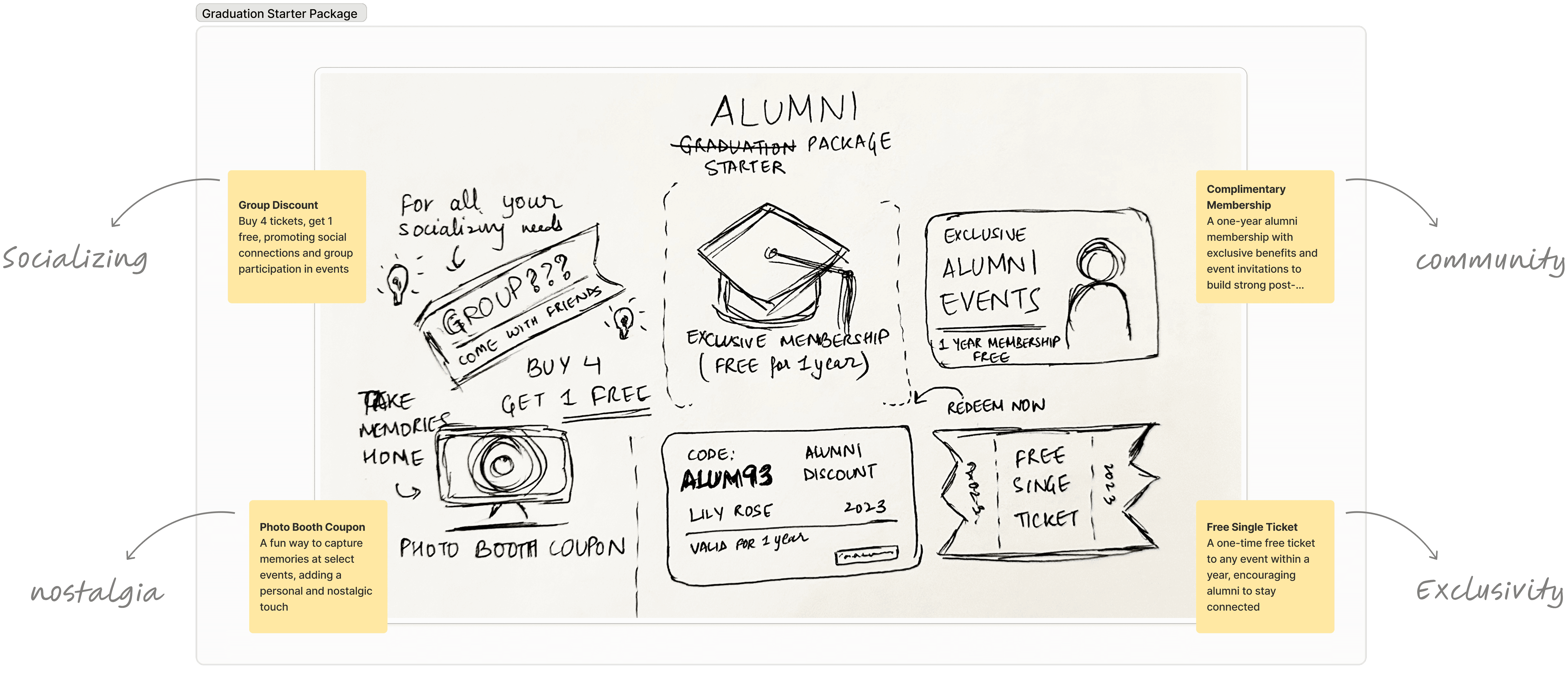
Alumni Starter Package
Our research highlights the importance of cultivating a strong and lasting UMD identity among alumni, particularly by offering meaningful opportunities and exclusive incentives to encourage their participation in university events. This understanding led to the creation of the Alumni Starter Package, designed to foster early engagement among recent graduates.
The package reflects our findings that new alumni are more likely to stay connected with the university when provided with opportunities to participate in social and community-building activities. By offering targeted perks and benefits, this initiative aims to strengthen alumni ties, promote event participation, and create a lasting sense of belonging to the UMD community.
Alumni Day
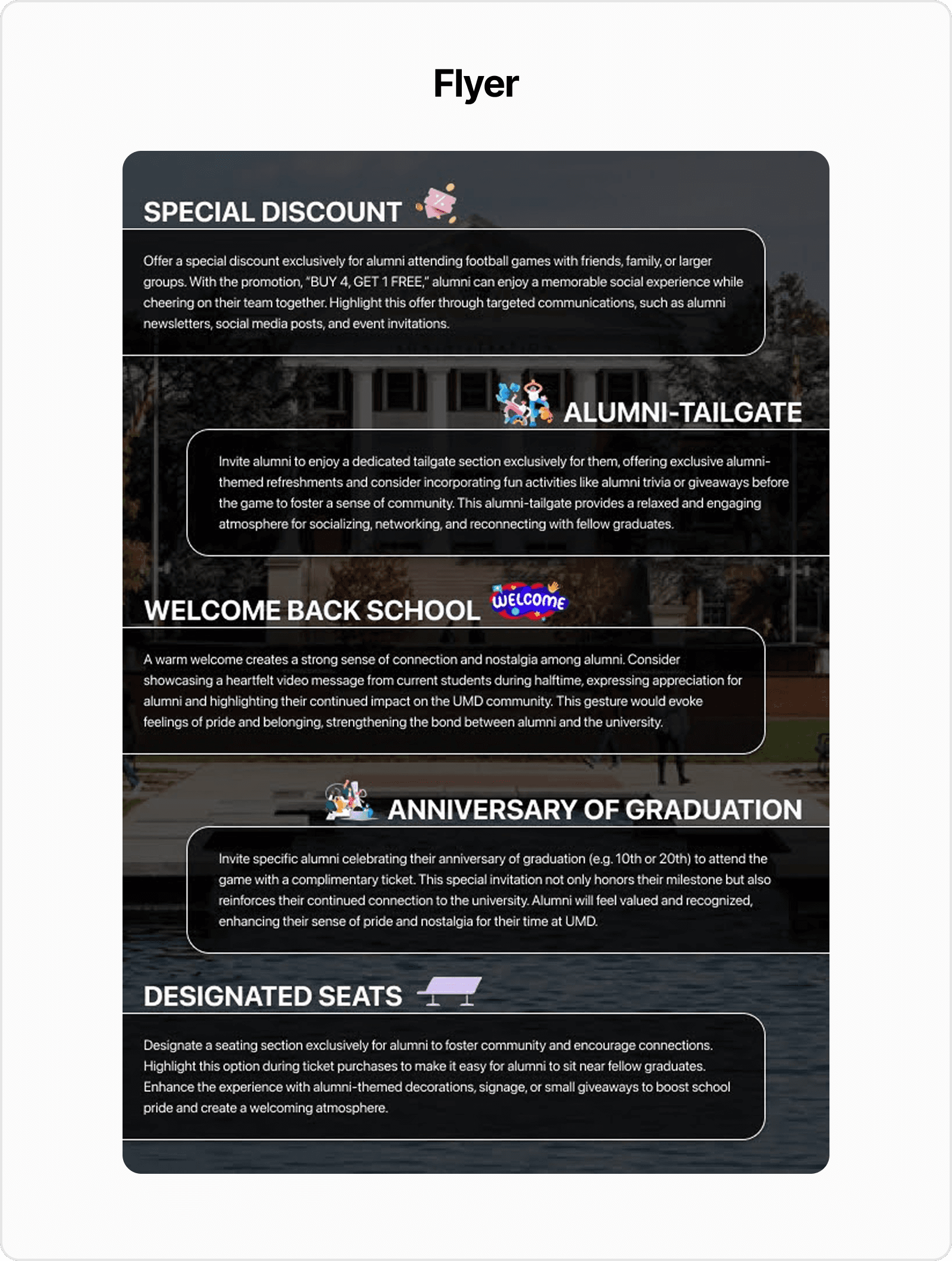
Our findings indicate that fostering a strong and consistent UMD identity among alumni, along with offering exclusive opportunities and incentives, significantly enhances engagement in football games. In response, we have designed a new event, "Alumni Day," where alumni are recognized as special guests, placing them at the heart of the game-day experience, with these following offerings: